
A Guide to Growing Roses
Cultivation of roses in the home garden can bring many challenges. However, with proper care and patience, a rose can bring a burst of color and an irresistible aroma to the garden. Whether you want to grow roses for cut flowers, for beauty in the landscape, or for the unique varieties, its important you consider what your goal is. Also, roses will only preform best when they receive 6-8 hours of sun or more each day, so be sure to consider that when choosing a location for a rose. Once you understand what you want out of your rose, you can then pick the type of rose bush you’d like. Listed below are a few of the types of roses that you’ll see in modern gardens, and an example of a cultivar for each.
Shrub Rose
- Has a powerful presence in the landscape
- Easier care
- Reliable and ever-blooming

Shrub Rose Hyrbid – ‘Knock Out Red’
Groundcover Rose
- Low growing and sprawling habit
- Makes for a great accent planting
- Blooms from spring into fall
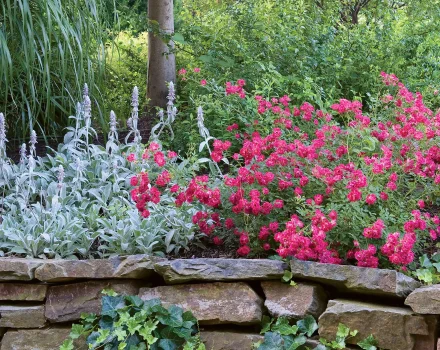
Groundcover Rose – ‘Red Drift’
Climbing Rose
- Vigorous grower will climb when given the opportunity
- Drought tolerant when established
- Will continue to spread

Climbing Rose – ‘Blaze’
Mini Rose
- Dwarf rose stays under 2′ tall and wide
- Miniature blooms
- The perfect rose for container gardens
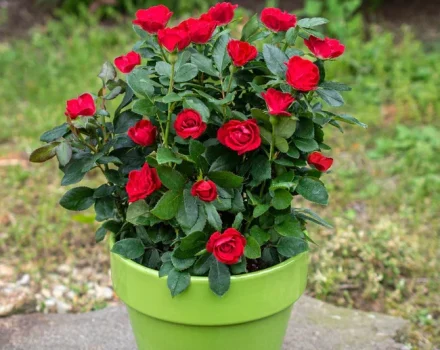
Mini Rose Hybrid – ‘Petite Knock Out’
Hybrid Tea Rose
- Tall, sturdy, and straight stems
- Makes an excellent cut flower
- Blooms are elegant, but more sparce

Hybrid Tea Rose – ‘Mr.Lincoln’
Grandiflora Rose
- Plant can get very tall and bushy
- Large flowers arranged in clusters
- Works great in the mid to back section of a cottage style garden
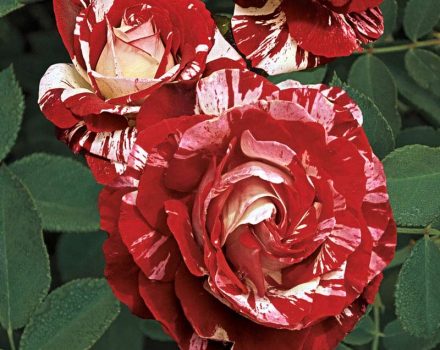
Grandiflora Rose – ‘Rock and Roll’
Floribunda Rose
- Plant stays 2-4′ tall and wide
- Continuous clusters of blooms
- Great for borders or containers
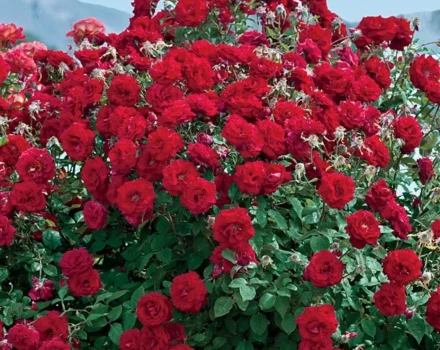
Floribunda Rose – ‘Oh my!’
While there may be some slight differences in the care for each rose, there are three main practices that are critical to rose care. First, pruning in order to remove dead, diseased or damaged parts should be common practice. Next, monitoring for any signs of pests, herbivores, or diseases and responding as needed. Lastly, be sure that you are feeding the rose bush what it needs to produce an abundance of flowers.
Pruning
When pruning any shrub, you should always keep an eye out for any dead, damaged or diseased parts. That being said, there are two other main reasons that we prune roses. One, we give them a heavy cut back in early spring or late fall in order to keep them looking brand new and prevent leggy growth. Two, we will cut to remove flowers that are past bloom. By removing the flowers just before they go to seed, it encourages new blooms to set. While it is true that many modern roses don’t necessarily need this pruning to preform, all roses will benefit from a clean-up a few times throughout the year.
When pruning roses, make sure you have sharp shears. If your blade is dull, it may damage tissue, which can harm the healing process. Also, make sure your blade is clean. Sanitization is not always needed, but if you don’t sanitize you run the risk of spreading disease. Gloves are also helpful when handling the thorny stems.
You’ve got your gloves and a sharp, clean blade. Now what? Knowing where to cut is important too. First you need to find the dead blooms. On many roses, they bloom in a cluster. If they are in a cluster, it’s best to treat them as if they were one flower. Once you’ve identified the spent bloom or blooms, then follow the stem downwards. As you go down the stem from the flower, you will see leaflets of 3 or 5. Sometimes, you will see new growth emerging from where the leaflet meets the stem. Continue to go down the stem until you find a spot that has a healthy color and 5 leaflets. It’s ok to take out 12″ or more at a time on larger growing roses. Be sure to cut far enough so that the new growth does not topple the plant. Aim for a strong sturdy plant.
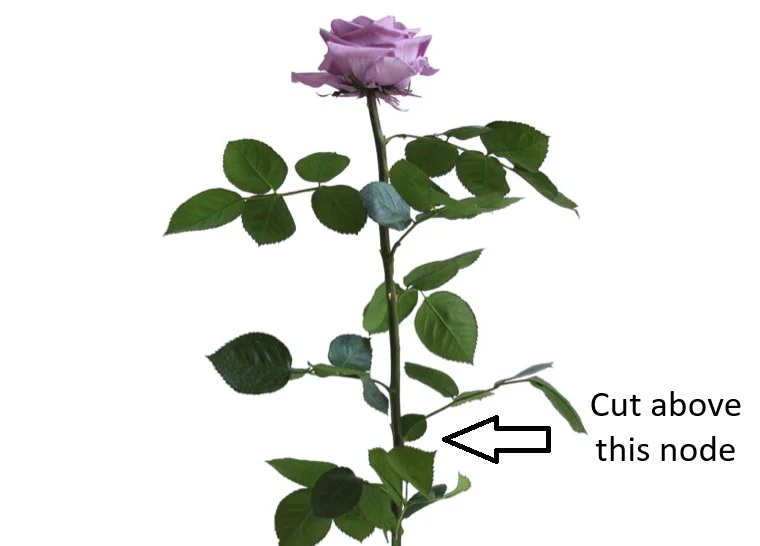
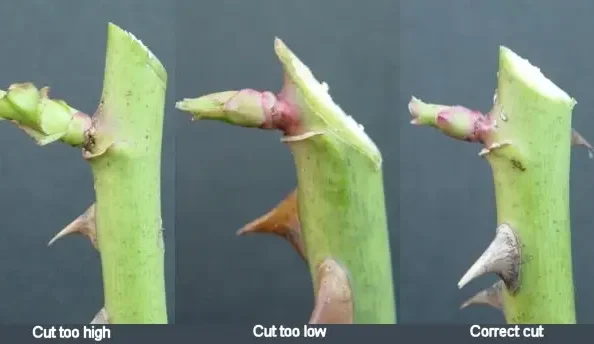
Proper cutting is important to how the rose heals. Make sure to cut above the bud on an angle that slopes down away from the bud. If the angle of the slope is pointing towards the bud, it can induce rot. Cutting too high can lead to the bud failing to properly heal. Cutting too low can lead to bud damage and may slow the new growth. The proper angle and height are necessary to ensure that the rose is able to heal properly.
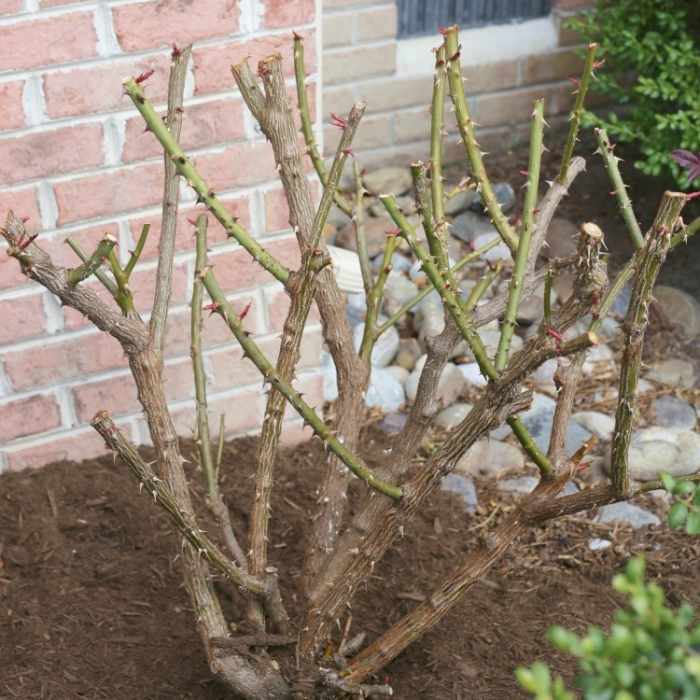
This concept of cutting by the bud can be translated into pruning for most shrubs and some trees. It’s also important when cutting your rose back for fall or spring. We prefer cutting in early spring right before everything wakes up, because it allows the plant to heal easier, and you can also identify anything that died from winter. Old and dead stems will have a gray color and will be brittle. Old yet alive and functioning stems will be at the base and have a brown color to them. Above this, you’ll be able to see green stems. All of the green stems were the growth from the previous season. Cut these stems down to roughly 4″-10″ above the older growth. This will keep your shrub rose tight and prevent it from being leggy.
For climbing roses, you don’t have to reset them the same way. Just be sure to cut off any excessive growth that intrudes into unwanted areas. As always check for dead, damaged and diseases growth.
Pests and Diseases
One of the biggest hurdles with rose care are the pressures of pests and diseases. Lots of modern landscape roses have developed some pest and disease resistance, but issues can still arise.
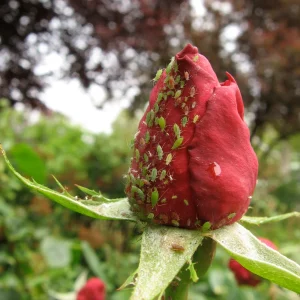
Bugs will always be in the garden, since it’s their home. A rose makes a great snack for some garden critters. Methods for removing each pest will depend on the pest, and your gardening preferences. If you must choose to spray, try to use an organic option. Even spraying with just high-pressure water can be effective and not harmful to the planet. Listed below are a few common rose pests.
Aphids
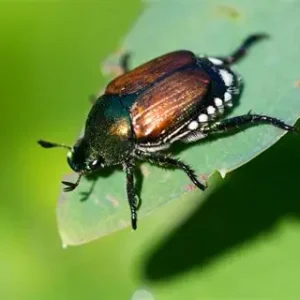
Japanese Beetle
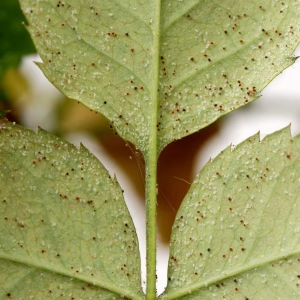
Spider Mites
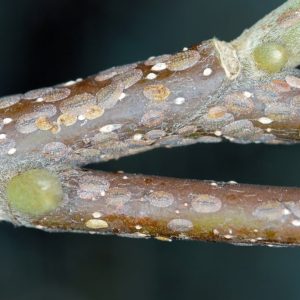
Scales
Diseases, like bugs, will always be prevalent in the garden. However, there are ways to help prevent the spread of bugs and diseases before they even set in. Try to avoid growing in a monoculture, or groups of only one plant. While repetition is necessary in some gardens, too much of the same thing makes it easier for diseases and bugs to spread quickly. By adding a wider variety of plants and more biodiversity, it slows the spread of diseases and bugs. Many diseases can be slowed by removing he infected foliage completely or mostly. Followed by an organic fungicide. Still, especially with roses it is important to be able to identify what is going on with your rose so you can know the best method to treat. Listed below are a few examples of common rose diseases.

Powdery Mildew

Black Spot
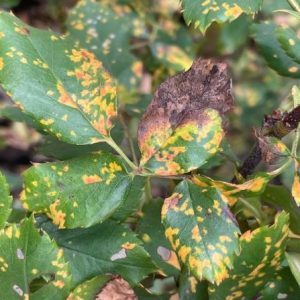
Rust
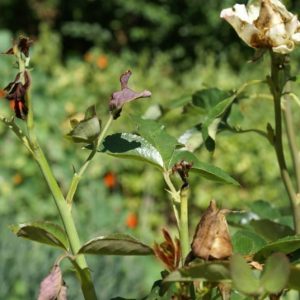
Botrytis Blight
While everyone will likely encounter some sort of pest or fungus throughout their gardening journey, not everyone will be faced with the pressure from deer. Deer are big fans of rose buds. They love to chew the flowers off, before they ever get the chance to open. There are ways to mitigate the deer damage. Fencing is an option that can be very effective but may not be preferred by all. Planting perennials with strong odors that deer don’t like such as lavender, Russian sage, or mountain mint can help to deter the deer but will not be 100% effective in heavily wooded areas. Typically, the most appealing option to the home gardener is the use of repellents. 43 Farms carries different deer and animal repellents to help you keep them away from your roses.
Fertilizing
The most important part of growing beautiful roses is fertilizing. Rose love to be fed, since they have a high nutrient demand to keep those blooms coming in. You should be feeding all of your shrubs, trees, and perennials with a slow-release organic fertilizer twice a year. Feed once in April-May, and feed a second time in late August-September. Use a product like Flower-Tone, Plant-Tone, or Coast of Maine Roses and Flowers. In addition this regular feeding that all of your shrub should be receiving, roses will benefit from a few feedings of organic liquid fertilizer. By giving them that extra shot of nutrients, it ensures that the rose can continue to bloom all season.