
Houseplants are a great way to bring nature’s beauty indoors. 43 Farms offers a selection of houseplants and tropical plants ranging from small to large. Having plants in the house therapeutic and make for great modern house decor. Houseplant care will be different for everyone based on the conditions in your home. Light, temperature, and humidity are big environmental factors in plant care. Making sure you give your plant the conditions they’re used to is key to being a great plant parent.
It’s important to understand a few terms when discussing houseplants. Light can be either direct or indirect. Direct light is like if you were standing outside on a sunny day in the middle of an open field. Indirect light would be that same sunny day, but you’d be standing under the cover of a tree. Indirect light is sometimes subcategorized by saying bright indirect light or just indirect light. When inside the house, we rarely ever get direct light for a long time, most of the light is indirect or dull. Humidity is usually seen as low (0%-30%) ambient (30-50%) or high (60%+). It’s important to avoid putting plants directly next to heaters or vents to prevent their leaves from drying out. Tropical houseplants typically do not want to be cold. Keeping them above 60 F will promote more growth. Freezing temperatures will be detrimental to most houseplants.
It was mentioned before that each individual’s care will differ depending on the conditions of their home. This is especially true when it comes to watering. The temperature and airflow in your home are big factors in how fast the soil dries out. A plant by a cold drafty window will stay wet for longer in winter. However, if the same plant was by a bright window on a hot summer day that plant will dry out faster. Therefore, you can’t really have a set in stone watering schedule. It’s best to check the soil and look for visual cues every few days to make sure you water when the plant needs it. When the soil is dry, makes sure to fully saturate it. After soaking the soil, wait until it is fully dry again before watering. Some plants like to dry out more or less between waterings. Overwatering and underwatering are the biggest houseplant killers, so knowing your plants watering needs and if the soil needs to be watered are keys to success.
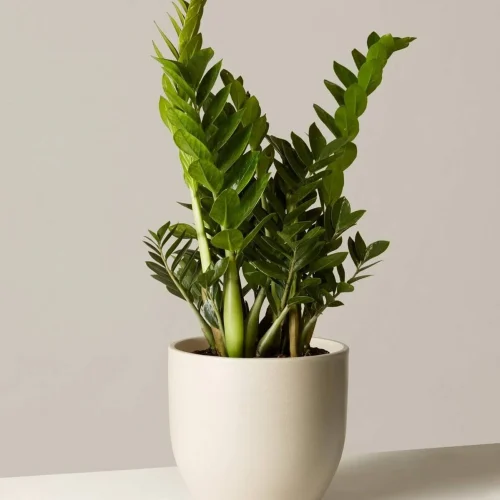
The ZZ plant is a highly adaptable beginner friendly plant. Thrives with bright indirect light but can tolerate low light settings as well. The key is to wait for the soil to be 100% dry before watering again.
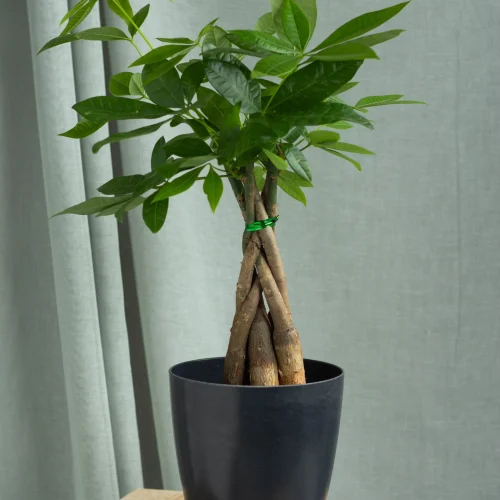
The Money Tree is often grown braided. Said to bring good fortune, these are popular for being easy to care for. Water when dry, and place in bright indirect light.
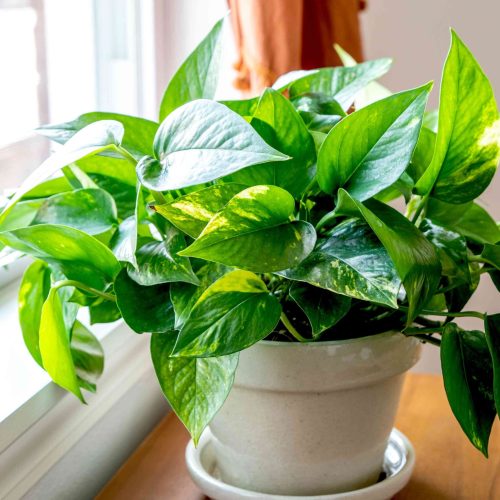
Pothos are vining plants that climb trees in nature. Give them a support to climb to size up the leaves or allow them to trail downwards for a different look. Very easy to propagate from leaf cuttings.
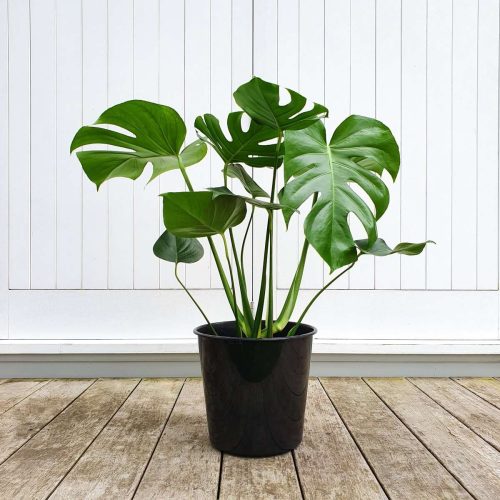
Like pothos, monstera will climb trees in nature. However, they feature much larger fenestrated leaves. Allow the soil to get fully dry in between watering. Supports will be necessary.
A popular floor plant which can really make a statement in a room once it gets bigger. Give as much light as possible without giving direct light.
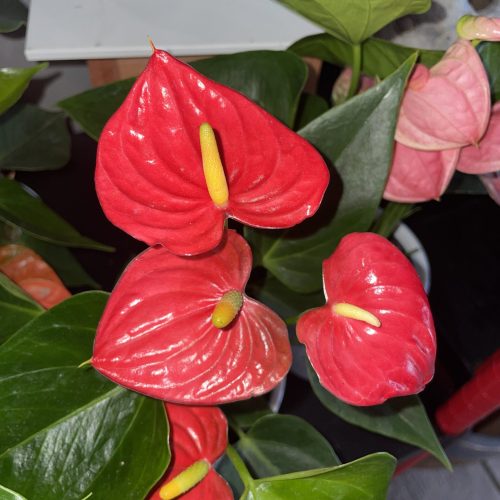
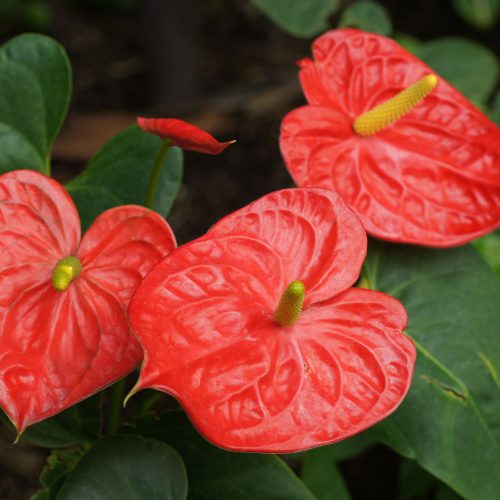
Anthuriums are prized for their large leaves and unique flowers. They appreciate higher humidity and consistent fertilization to keep them in bloom.
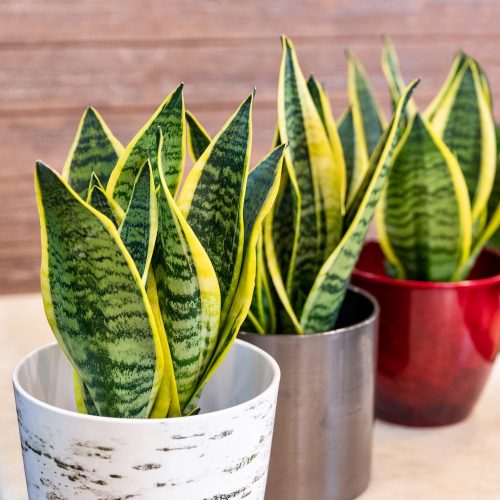
Snake plant, sometimes called Mother-in-Law’s Tongue plant, is known for its easy care. This drought preferring plant thrives off of a once per month watering, and warm temperatures. More light will encourage more growth, but these plants can handle a low light setting too.
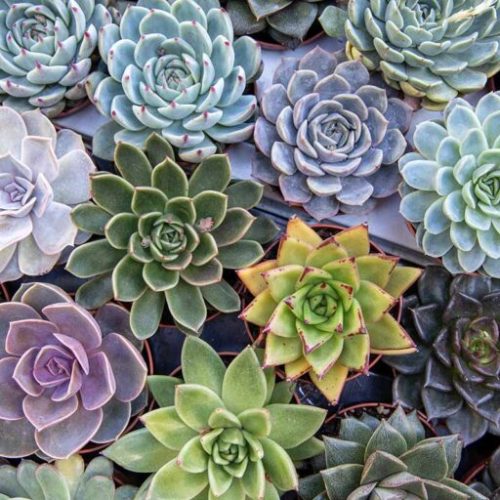
Coming in a diverse variety of colors and shapes, these succulents are perfect for the lazy plant owner. The key to succulent success is high light and a full soak when completely dry.
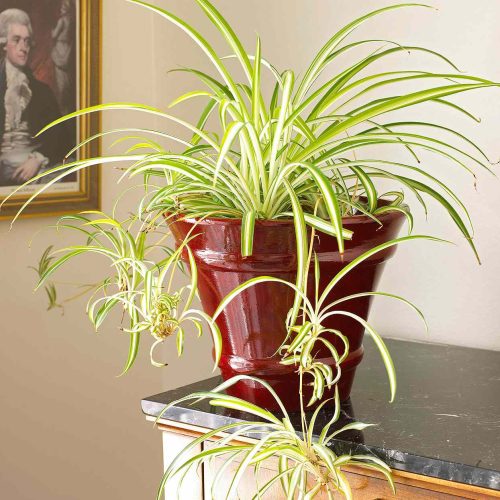
Loved for the little “spider babies” that they grow, spider plants are resilient. More light will lead to faster growth and more “spider babies” which can be easily propagated to grow more spider plants.
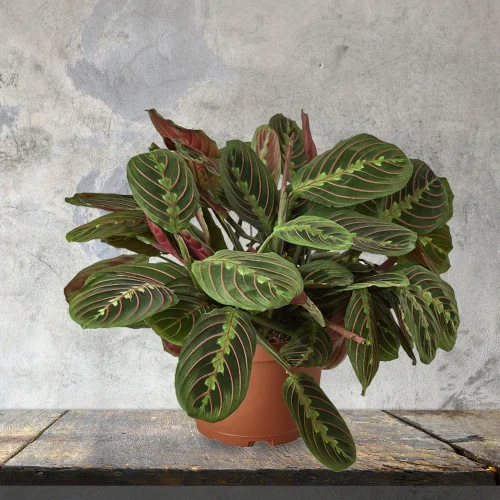
Coming in with a wide selection of patterns and colors, prayer plants make a great addition to any room. They have leaves that move with the sunlight throughout the day, being raised with low light, and lowered with high light. Prayer plants are also called Maranta, not to be confused with Calathea (a much more difficult plant to grow).
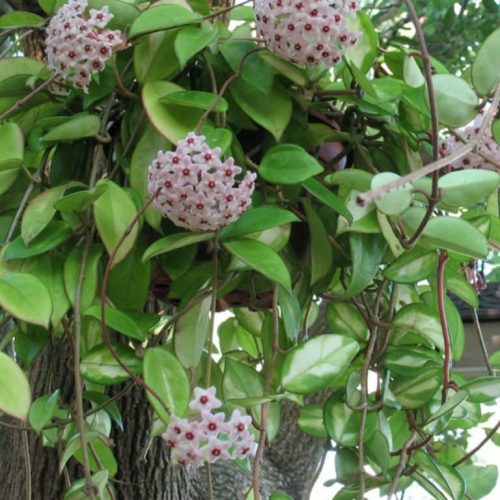
Hoya are fast growing vines which when mature reward us with colorful and sometimes fragrant flowers. Hoya are very adaptable to different conditions and will display different traits with different care. There are many different types of Hoya.
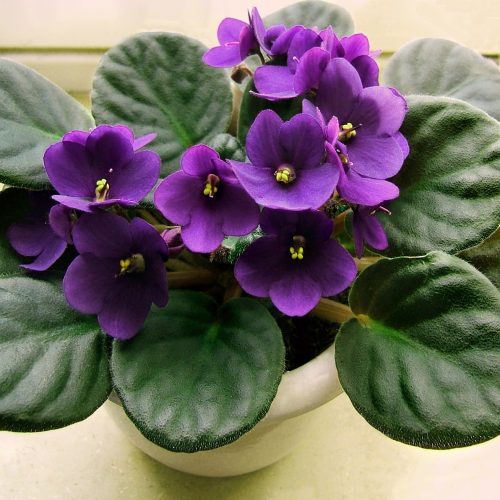
Keep on a constant liquid fertilizer plan to keep blooms coming in. Do not overwater, some people recommend watering from the bottom to prevent over watering.
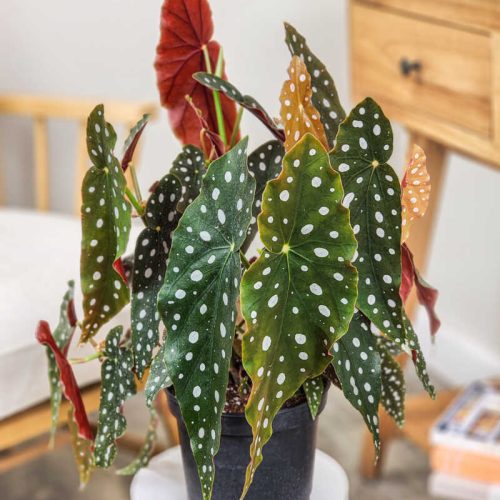
Most people know Begonias as a bedding annual. However there are more begonias than you could imagine which are grown mostly for the foliage. Pictured is Begonia maculata. Keep out of direct sunlight and water right away when dry.
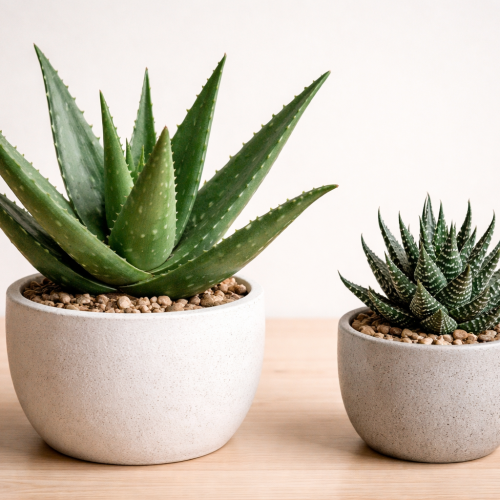
Aloe and Haworthia may be different, but their appearance and care is very similar. Allow the soil to dry completely in between watering and give plenty of light.
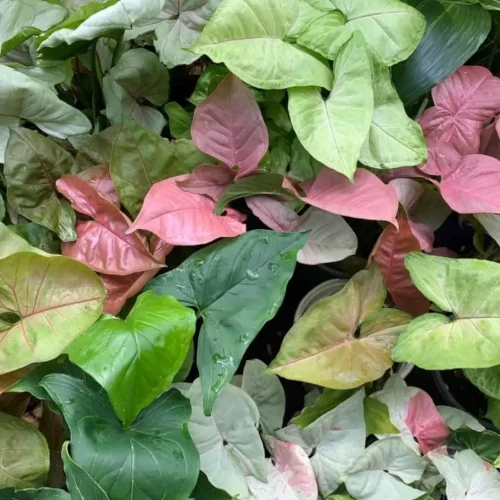
An underappreciated houseplant, Syngonium are prized for their ease of care, their leaf shape, and the colors/patterns of their leaves. Don’t allow to stay dry too long.
Once you’ve learned how to keep your plants alive, it’ll be time to take the next step into making them thrive. Going from a small and leggy vine to a robust and full specimen. In order to make the shift towards rewarding growth, you’ll have to add a few things to your care routine.
Adding a grow light for your plants will take them to the next step. While most of the houseplants listed above can survive in low light, they won’t thrive until they receive that bright indirect light that they crave. A good grow light will display the full spectrum of light. LED lights are usually preferred, since they remain cool to the touch and don’t use as much power. However, you can use fluorescent or incandescent lights also. Many people may think that grow lights will look too “industrial,” but there are plenty of different lights on the market that were made to get around that barrier. Halos, towers, lights that attach to shelves, lights with adjustable arms and much more. There are lights that work for any space or aesthetic.
The next thing to improve the growth rate of your plants is optimizing other conditions. Temperature and humidity are big factors to success as discussed earlier. Hydrometers can be very cheap, and will take the guessing out of humidity levels. Some spaces may need a humidifier for proper plant growth. Be sure keep your plants warm in the winter, and away from drafty windows or vents.
The most important step you can take to improve your houseplant success is implementing fertilizer into your watering. By using a liquid fertilizer each time you water, you will ensure that your plants are receiving the nutrients they need. 43 Farms offers Jack’s All Purpose 20-20-20, our favorite liquid feed for broad applications. By feeding your plants, they’ll reward you with non-stop growth!